Monday, 13 April 2015

HR is...

www.pixgood.com
A picture of...


I attended an event this weekend, the theme of which was 'balance'. I often think and present in terms of imagery and stories, so immediately this theme has me thinking of old style weighing 'scales'.

I was presenting with my image coach hat on, but at work this morning it struck me that scales are the perfect visual to describe the role of HR too.

We're often the pivot/beam between employees and the organisation (recognising that they are part of the same but sometimes, sadly, not on the same page) and our roles often swing between helping to make people happy (eg employee engagement) and dealing with the unhappy (eg grievance)

Also, if you search for 'scales' online, you get a range of images from fish to weighing equipment - representing in my mind, our versatility (and possibly in the mind of others differing levels of usefulness)!

The fact that 'scales' often represents justice also sits quite well.

My other option of a visual was of a pig, as in 'piggy in the middle' but I'm sure you'll agree this didn't seem quite as professional or flattering!

What image would you use to represent HR?

Thanks for reading,
Denise x

For more:
  • Contact me using the 'Contact form' above right
  • Follow me at: @DamsonHR (Twitter)
  • Call direct on: 07887 643807
  • LinkedIn: Denise Sanderson-Estcourt, FCIPD

Thursday, 5 March 2015

Where are your hard efforts getting you?

Spinning class or Bike ride?


 or

Whilst stopping (or even slowing down!) doesn't come naturally to me I recently found myself suggeting to a group of managers that they: Stop/slow down, reflect, and thoughtfully respond to matters rather than reacting to them.

So, what's that got to do with 'spinning class or bike ride'? I hear you say!

Well, here's the thing.
Of course, there are similarities between these activities - both are forms of excerise, both have the potential to make you sweat, both involve you taking a seat, both require a cycling motion. But, there is one big difference - only one will actually take you somewhere!

Imho....Sometimes we are so busy, doing so much doing that we actually end up going nowhere (or at least feeling like we're going nowhere) - a bit like being on an excercise bike where you're spinning but staying in the same place.
Whereas, if you're out cycling, there are a wider range of benefits - for example:
- There's a greater focus on the journey, rather than just the activity itself.
- We may see other things happening around us, and can even stop to take them in.
- We're breathing in fresh air on the way (London may be an exception I know!)

A spin class is mainly about working hard, going (nowhere) fast. A cycle ride doesn't necessarily mean going slow - but you can chose and vary the pace; and it is about going somewhere, ideally with purpose*.

This group of managers had been spinning really hard but weren't getting the improvement levels/recognition that their efforts might deserve. There can be so much good stuff going on but because there's no break to communicate until the end, all your efforts might have little reach/impact.

There is a place and a benefit for peddling furiously and building up a sweat (in business terms: when there's a crisis for example) - however, I'd just suggest that if you really want to go places, it's often not the best use of your energy.
*And there's a place for no purpose too, eg when looking for innovation!

So, think about it - right now, do you actually need to...

Think about the destination (vision/aims), the pitstops you may need to make (have a plan), stop at red lights and reflect, look at how far you've come, and ideally enjoy the ride with others. You might even want to get off the road, get on your mobile, and tell everyone what you're doing as you go. (PS - Pictures and/ stories help!)

For the record, despite admitting earlier that slowing down/stopping doesn't come naturally to me, I do practice what I preach when I can and can tell you there really are real benefits to doing it...
  • So the questions is:
What approach do you and your organisation take/need to take?
Do you want/need to work up a sweat at a Spinning class or do you want/need to go on a paced, purpose-full Bike ride?


Thanks for reading, I'd love to hear your thoughts!
Denise x

For more:
  • Contact me using the 'Contact form' above right
  • Follow me at: @DamsonHR (Twitter)
  • Call direct on: 07887 643807
  • LinkedIn: Denise Sanderson-Estcourt, FCIPD


Sunday, 1 February 2015

Hope in the workplace

Is hope enough?


The word 'hope' has been following me this week.

Last night I watched the brilliant (but often painful to watch) Shawshank Redemption*, which amongst so many great messages covers 'hope' with central character Andy Dufrense saying...


On winning her 19th slam title yesterday, Serena Williams said in an inspiring speech** "I walked on court with a ball and a racket and hope" to describe the start of her journey.

These quotes reminded me that earlier this week, I'd had a conversation with a jobseeker who said they 'hoped they'd find work soon'.

Also this week, Langley House Trust said farewell to their departing Chair Anthony Howlett-Bolton. At the celebration, we were reminded of some of his key phrases/teachings. One, not mentioned, that stays with me is his perspective on 'hope' as whenever Anthony attached hope to an expected outcome - he rephrased his statement. Not because he is a man without hope but rather because he recognised that hope alone doesn't get the job done, which was at odds with the manner of the jobseeker I mentioned.

How often, however, do we (you, I!) talk about hope as if it will get us a result? We need to be careful of using hope as a driver especially in our communications, eg giving instructions, with others. I know in my HR career, I've often talked to managers who've said 'we hoped the situation would improve' for example. What, that's it - you just 'hoped'?!

So whilst positive, what place (if any) does hope have in the workplace?

Taking the Shawshank and Serena examples actually helps us answer this. Because, whilst Hope is an inspiring message, in reality it wasn't hope alone that ensured Andy's escape or secured Serena's win. Yes hope was a strong ideal, a factor, but it wasn't lazy!

  • Andy's hope was backed by knowing his truth, using his skills, and a patient, well executed plan. 
  • Serena's hope was backed by talent, self-belief, practice, and hard work.
  • Both show(ed) absolute determination and dedication, took their knocks and got up again defying the odds, and ensured they had company on their journey in order to achieve the goal(s).

In other words, Hope needs backing!

Sure, inspire people with hope in business but don't forget to communicate all that goes with it if you want it to get you results.

* Based on a book by Stephen King
** See Serena's speech here: https://www.youtube.com/watch?v=Qgw4F90oFRQ (2.05 minutes)

Thanks for reading, I'd love to hear your thoughts!
Denise x

For more:
  • Contact me using the 'Contact form' above right
  • Follow me at: @DamsonHR (Twitter)
  • Call direct on: 07887 643807
  • LinkedIn: Denise Sanderson-Estcourt, FCIPD


Friday, 16 January 2015

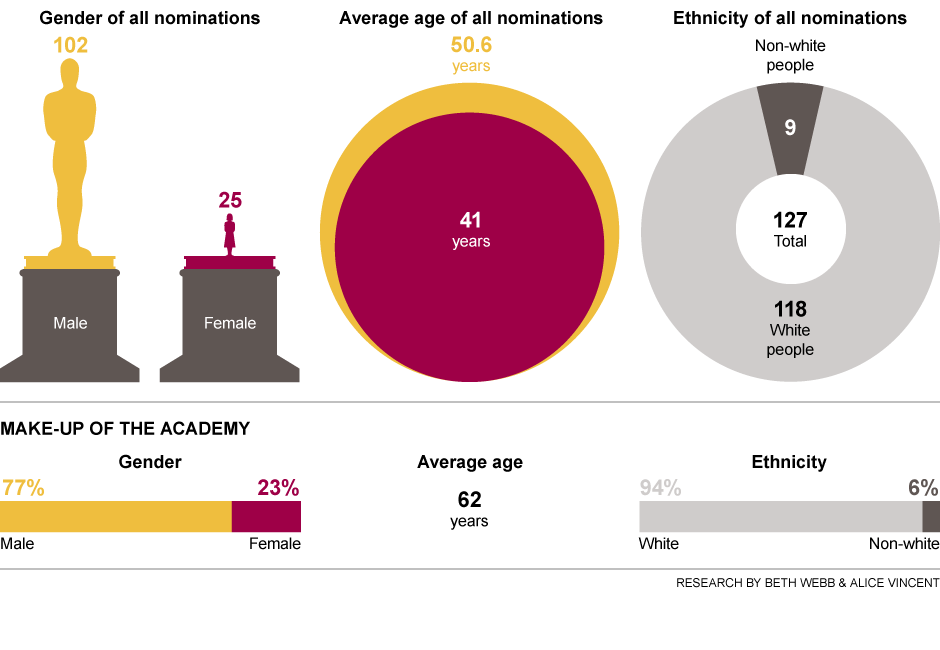
Oscar does not represent.

The Good, the Bad and the Ugly on the Oscar Nominations 2015.


Movies, at their best, have the ability to raise the issue of diversity in a positive way and challenge our thinking - think To Kill a Mockingbird, Crash and Brokebank Mountain as examples. So, whilst it pains me to write this blog, I feel compelled to do so.

Currently film has been a trigger for diversity (specifically race) conversations in the wrong way with negativity about a black Annie, a black Bond and black stormtroopers; and there've also discussions about whether able bodied actors should play disabled characters. And the biggie...

The internet has been full of comment about the 'All white' Oscars acting and directorial nominations with Jessica Chastain making an impassioned speech about the matter of #OscarsSoWhite quoting:


http://www.independent.co.uk/news/people/jessica-chastain-makes-emotional-plea-to-hollywood-to-fight-against-racist-agendas-following-all-white-oscars-nominations-9982237.html

And that's the 'good'. Social media gives us a voice (not always kindly eg in the case of Annie and Bond) that when used well, can ensure collective views are heard. And its also good (great actually) that people are frustrated by the lack of (visible) diversity on the list.

The 'bad' about the situation is the list itself. And it's not just about no black actors, it's also that there are no women on the Directors list (no nods for Angelina Jolie or Ava) for example.
I'm sure Ava DuVernay, would not want to be recognised simply because she is a black woman, she would want be recognised if the belief is that she did a great job making a movie. And given that the film 'Selma' is nominated for 'Best Film', we have our observation about that.

But the 'ugly' in my opinion is how the race of Cheryl Boone Isaacs as President of AMPAS seems to be being used to dismiss the issues raised. Her position does not change the historical or 'institutional' issues, or the fact that the movie industry is not reflective of the society it seeks to entertain.


I will always argue that diversity is not solely about the differences of race, gender, religion, disability, sexual orientation etc. For example, you could be looking at three white females but there'd still be much diversity in terms of age, sexual orientation, marital status, religion, not to mention a host of different behavioural styles.

Diversity is about different people being not just represented but respected, treated fairly and their differences embraced. Is this how you see it?

However, there is no getting away from the fact that it's soul destroying to look at the Oscar nominations and have to recognise that 'the system' as it stands is biased towards middle-aged white males and that it has not moved on to reflect wider demographics.

Could the  'charges' be levelled at your organisation?

Thanks for reading, I'd love to hear your thoughts!
Denise x

For more:
  • Contact me using the 'Contact form' above right
  • Follow me at: @DamsonHR
  • Call direct on: 07887 643807
  • LinkedIn: Denise Sanderson-Estcourt, FCIPD


Monday, 5 January 2015

New Years Resolutions and Retention

Ask, Listen, Learn and Act!


If you want to decide where to focus your HR, communication, and engagement attention and energy in the first 90 days of the new year then ask your staff  "What's your new years' resolution?".

We know that many people start thinking about their careers (amongst other things) in a new year, but I'm not suggesting anyone will respond to the the question by boldly stating that they're looking for a new job (though someone might!).

However, there's still something in it and that might help us keep people committed to an organisation and or re-energise/re-engage them.

- Individual resolutions:

If, for example, someone asked me for my resolutions one of them I'd willingly confess to is wanting to blog more. If my employer then helped me achieve that it might be the difference between looking to move on or not. My employer might choose to let me write a blog for the organisation, they might give me projects that would give me subject matter, they might send me on a writing course and more importantly it would mean that they were listening and developing me in a way that was meaningful to me and not just beneficial to them.

An organisation might ask "What's in it for me?" and that would be totally valid. Given the 'blog' example, one practical benefit might be me being better able to write in-house materials (eg a staff newsletter) but more importantly, I'd be more likely to feel heard, engaged with, and supported, by the organisation which can never be a bad thing, even if all it does is highlight a disconnect between my ambitions and options.


- Shared resolutions:

As well as the 'personal' aspects of understanding someone's resolutions, understanding what a commonly held resolution across the organisation (or perhaps a team's) might be, could direct an organisation to look at it's activities, policies and/ benefits.

If the majority of your workforce wanted to get fit and you don't yet have a wellbeing offer - perhaps you could consider this. If the majority wanted to go on a dream holiday - perhaps introducing a policy on sabbaticals might be of value. If the majority want to learn new skills - perhaps a more holistic approach to training, learning and development might be worth considering. If the majority want to 'give more' - a volunteer scheme with a local charity or sponsored activity/event could be considered. On so on!

And don't just ask the question - genuinely listen to the responses, think creatively about the solutions and help your staff monitor the progress. It doesn't have to be formal (in fact I'd suggest against it!).

If you introduce something that might help a group of people achieve their resolutions, don't forget to communicate it widely. And if it's part of the plan for the coming year, communicate that too. People won't necessarily hang on if they're determined to leave, but it's those people who just 'peek' at the new jobs sections in the new year who may decide not to.


In writing this blog I had this flashback:
Some years ago, in a hotel I worked in, an informal conversation with a room attendant lead us to understand she had designs on learning floristry. She was supported by the Head Housekeeper, encouraged to speak to the hotels floral suppliers, sponsored by the hotel, and began to help out with hotel displays. The result: She was promoted later that same year (I believe in part because she was able to bring her external passion and skills into work). Who knows if she'd have left the hotel and become a florist anyway, but had she we'd have lost a good, engaged employee because we'd missed a trick!

Of course, (a) some people make a point of not setting resolutions (does this tell you something?!) and (b) none of this is going to make a difference if bigger issues aren't assessed but... you might just learn some things that help you to retain some people.

So, HR colleagues - who's up for asking the question: "What's your new years resolution?" (and feel free to share yours here too!)

Thanks for reading!
Denise x

For more:
  • Contact me using the 'Contact form' above right
  • Follow me at: @DamsonHR
  • Call direct on: 07887 643807
  • LinkedIn: Denise Sanderson-Estcourt, FCIPD


Wednesday, 29 October 2014

Lessons on a train!

Where I learn.


I recently tweeted that I learn (or am reminded of) a lot, from a HR perspective, on trains. 

The train often provides a contained, out-of-office, legit' in-company-time place for colleagues to talk about issues (assuming their boss isn't travelling with them!)... Good and bad.


Have you, like me, ever found yourself accidentally tuning in a conversation between work colleagues? I don't mean to be nosey but it can be fascinating!

Yesterday travelling back from Leeds I was reminded of a key aspect of employee reward/recognition, based on a gentleman telling his colleague about being 'rewarded' at work.

He'd been chosen for a company award for going the extra mile and being a great team player (apparently!) 

His reward: A meal with other high fliers and his MD.

His response: "I'd rather be in the pub with you lot" (his colleagues).

He told his colleagues that he'd politely declined the invite, making something up to avoid going. He said he was grateful, but it wasn't 'his thing'. "Can you imagine?!" he asked them. They nodded, laughed and moved on to talking about sales. So here's the thing:

The plus: The company had obviously done a good thing in recognising his contribution but... 

... The problem: They'd got it wrong when it came to HOW to recognise it. This team player was being rewarded as an individual. And not as he would have chosen. Oops!

The lesson on the train - If you're going to truly reward an employee, make sure it's what they see as such!


What have you heard or discussed on a train recently, and did it teach/remind you of anything?

Thanks for reading!
Denise x

For more:
  • Contact me using the 'Contact form' above right
  • Follow me at: @DamsonHR
  • Call direct on: 07887 643807
  • LinkedIn: Denise Sanderson-Estcourt, FCIPD

PS - This may become a bit of a feature, so apologies in advance if you ever find yourself sitting next to me on a train!


Tuesday, 10 June 2014

A good staff survey?

Yesterday, Today, Tomorrow!

What your staff survey could be telling you.

In the first instance our survey should be telling you is how your staff feel and how engaged they are.
We all know that to do this part, a staff survey must be meaningful and measurable with clear, relevant questions. We know that staff should be communicated with pre and post a survey, and encouraged to complete it in an engaging rather than forceful way. We also know that it MUST be acted on.

I have lead on countless staff surveys and what is sometimes missing is the why (rather than the what, when and how). Yes, we rightly give staff a voice and assure staff that we will use their feedback to make positive changes - the 'win' for them (if changes actually take place). But what is the win for the organisation given that a staff survey can be costly in terms of time and to some extent money (eg to conduct, communicate, analyse and carry out all the recommendations).

A recent staff survey I worked on focussed heavily on the here and now, with little focus on what had been happening in the organisation and on how people felt it was progressing. The focus on 'the now' was great as a snapshot, but it wasn't alone going to help the organisation plan for the future with an understanding of it's history and progress from a staff perspective.

A good staff survey, in my opinion, should allow the organisation to understand three things:

Where you've been and how far you've travelled (Reflective)
- Some of this will come from comparing historical data, but you can further assess this with questions like what went well and what could we have done better, eg around change; and how things are now compared to the past.

Where you are now (Current)
- How do people feel right now in the moment? And it really is in the moment - a heavy workload can limit open responses and a current issue can very much cloud opinion. (so obviously be careful of the timing of your survey - not always possible if external factors are at play combined with a fixed schedule!). It may with these questions, help to do a benchmarking exercise with others in your sector.

Where you might be headed (Predictive)
- Indicators may come from questions such as: what could we improve, do you see yourself in the organisation in x months time, are you confident in the organisation's plans for xyz. This is especially useful if you don't do interim and/ regular surveys or have regular means of getting feedback.

My tip therefore is to ask at least one of each type of question per section - 
How have we done, how do we do, how should we...?

Knowing all these things in time will actually save the organisation time and money in the longer term. The reflection can tell us what actually worked so we put money in the right place, the current can be used to market the organisation as an employer thus facilitating effective recruitment campaigns and perhaps support on-boarding/reduce turnover, and the predictive can help you review or put plans in place for the future.

Thanks for reading!
Denise x

For more:
  • Contact me using the 'Contact form' above right
  • Follow me at: @DamsonHR
  • Call direct on: 07887 643807
  • LinkedIn: Denise Sanderson-Estcourt, FCIPD